Study and Work in Mauritius for Indian Students 2026–27: Courses, Fees, Visa & Job Opportunities
Explore studying and working in Mauritius in 2026–27, including courses, fees, student visa requirements, part-time work opportunities, and post-study options for Indian students.
✍️ Admin📅 15 Aug 2026📁 Study Abroad
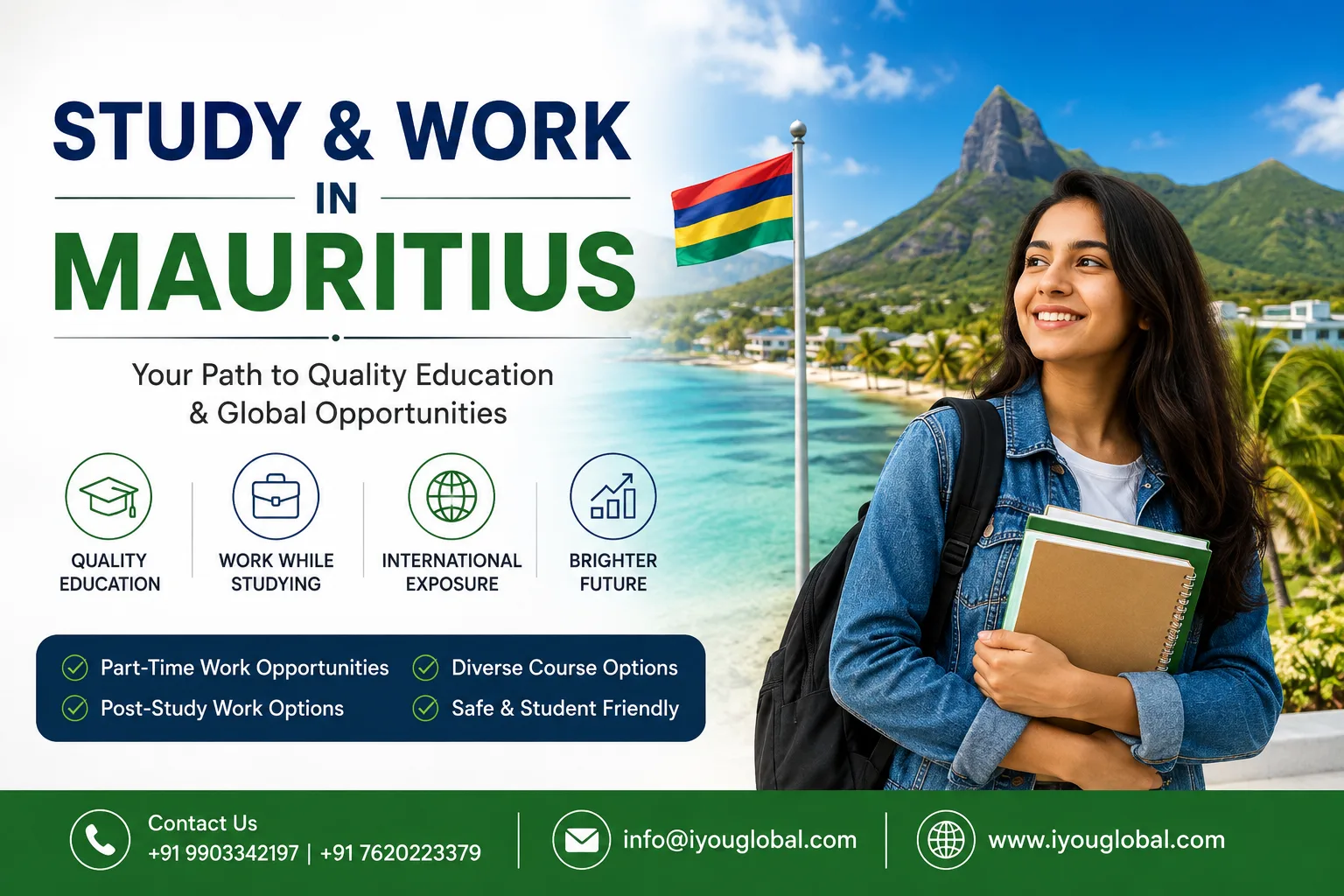
For Indian students looking beyond traditional destinations such as the UK, Canada, Australia and Germany, Mauritius is emerging as an interesting study-abroad option. Its English-friendly higher education environment, internationally oriented institutions and opportunities for eligible international students to combine education with part-time employment make it worth exploring for the 2026–27 intake.
Mauritius is also taking steps to attract more international students. The country's 2026–27 Budget announced plans for a centralised Study in Mauritius portal, expanded holiday work opportunities for foreign students and measures aimed at encouraging foreign graduates to remain in Mauritius through post-study work pathways.
But before applying, students need to understand exactly how studying, working, visas, fees and employment permissions work.
Study in Mauritius 2026–27: Quick Highlights
Particular
Details
Destination
Mauritius
Popular Study Levels
Diploma, Undergraduate, Postgraduate
Medium
English widely used in higher education
International Students
Accepted by recognised institutions
Work While Studying
Up to 20 hours/week subject to authorisation
Holiday Work
Expansion to up to 30 hours/week announced for foreign students
Student Visa
Required for eligible international students
Visa Application
Generally initiated by the educational institution
Mauritius is widely known as an island destination, but its appeal to international students extends beyond tourism.
The country has public and private higher education institutions offering programmes across business, technology, finance, management, hospitality and other professional fields.
For Indian students, some of the major advantages can include:
English-friendly academic environment
Range of undergraduate and postgraduate programmes
Relatively close connectivity with India
Multicultural society
Opportunities for authorised part-time employment
International learning environment
Growing focus on attracting overseas students
Potential post-study opportunities under evolving government policy
Mauritius is therefore particularly worth considering for students who want an international education experience without automatically choosing one of the most expensive traditional destinations.
Can International Students Work While Studying in Mauritius?
Yes, eligible international students may be authorised to work while studying in Mauritius.
Current University of Mauritius guidance states that international students may be authorised to take up employment for a maximum of 20 hours per week.
However, students should pay attention to the word authorised.
Studying in Mauritius does not mean a foreign student can automatically start any job without following the required procedure.
Students may need to submit documentation through their educational institution and obtain the applicable employment authorisation.
2026–27 Update: More Working Hours During Holidays
Mauritius has also announced an important change for international students.
Under the country's 2026–27 Budget, foreign students are planned to be allowed to work part-time for up to 30 hours per week during school holidays, instead of 20 hours.
This could make Mauritius more attractive to international students who want to gain work experience alongside their studies.
Students should check that the announced measure has taken effect and confirm the applicable conditions before accepting employment.
Study + Work in Mauritius: What Students Should Understand
The idea of “study and work” can sometimes create the wrong impression that employment is guaranteed after admission.
It isn't.
Students should separate three different things:
Opportunity
What It Means
Study
Enrolment in an eligible recognised programme
Part-Time Work
Employment subject to applicable authorisation
Post-Study Work
Opportunity after graduation subject to prevailing immigration rules
A university admission does not guarantee a part-time job.
Similarly, completing a programme does not automatically guarantee full-time employment.
Students should evaluate their employability, qualifications, communication skills and the local job market before making a decision.
Popular Courses to Study in Mauritius
Course availability depends on the university or institution, but international students can explore programmes in areas such as:
Business & Management
Popular options can include:
Business Management
International Business
Marketing
Human Resource Management
Entrepreneurship
MBA programmes
Information Technology
Students interested in technology can explore programmes such as:
Information Technology
Computer Science
Cyber Security
Software-related programmes
Digital technologies
Finance & Accounting
Mauritius has an established financial-services sector, making programmes such as accounting, finance and related business disciplines relevant options.
Hospitality & Tourism
Given Mauritius' globally recognised tourism sector, hospitality, tourism and service-management programmes may appeal to students seeking industry-oriented education.
Students should always verify the accreditation and recognition of both the institution and programme before paying fees.
How Much Does It Cost to Study in Mauritius?
There is no single “Mauritius study fee.”
Tuition varies significantly depending on:
Institution
Programme
Qualification level
Programme duration
International student fee structure
For example, published international fees at the University of Technology, Mauritius include figures starting around USD 1,430 per semester for some undergraduate programmes, whereas private/international institutions may charge considerably more.
Students should therefore avoid relying on advertisements that show one fixed price for “Study in Mauritius.”
Expenses to Consider
Expense
Students Should Budget For
Tuition
Depends on institution and course
Accommodation
Hostel/shared/private accommodation
Food
Monthly living expense
Transportation
Local commuting
Visa/Immigration
Applicable charges
Medical Requirements
Tests/medical documentation
Insurance
Where applicable
Books & Materials
Course dependent
Airfare
India–Mauritius travel
Personal Expenses
Phone, internet and daily needs
Always calculate the total programme cost before accepting an admission offer.
Mauritius Student Visa Requirements for Indian Students
International students need to follow Mauritius' student immigration procedure.
An important difference is that the student visa application is generally submitted to the Passport and Immigration Office by the recognised tertiary institution or TVET institution where the student has enrolled.
Common Student Visa Documents
Official requirements include documents such as:
Completed application to enter Mauritius
Passport-size photographs
Valid passport copy
Admission letter
Offer and acceptance documentation
Course details
Programme accreditation information
Proof of sufficient funds
Sponsorship evidence, where applicable
Accommodation details
Required medical documentation
Students should provide genuine and complete documentation throughout the process.
Is Mauritius Student Visa 100% Guaranteed?
No student visa should be described as 100% guaranteed.
Admission to an institution and visa approval are two separate processes.
Mauritius immigration authorities assess applications according to applicable requirements.
A strong application should therefore include correct academic documents, valid admission documentation, sufficient financial evidence and all required immigration paperwork.
Students should be cautious about anyone promising guaranteed visa approval without conditions.
Can You Travel to Mauritius First and Then Apply for a Student Visa?
Students should not travel as tourists with the assumption that they can simply convert their stay into a study permit later.
Mauritius' Passport and Immigration Office specifically states that prospective students should travel only after their study/training application has been approved.
This makes completing the correct process before departure particularly important.
Part-Time Jobs in Mauritius for International Students
Part-time employment depends on vacancies, skills, location, employer requirements and work authorisation.
Potential areas students may explore can include:
Hospitality
Tourism
Retail
Customer service
Administrative support
Food service
Sales
Technology-related roles
Internships related to their studies
However, part-time jobs are not guaranteed.
Students should not build their entire education budget around expected employment income.
Can Students Stay in Mauritius After Graduation?
This is one of the most interesting developments for students considering Mauritius for 2026–27.
The Mauritius Government's latest Budget states that foreign graduates will be encouraged to remain in the country through post-study work visas as part of efforts to address skills shortages.
This represents a potentially important development for international graduates.
However, students applying now should check the final rules, eligibility criteria and implementation of the post-study pathway rather than assuming automatic eligibility.
Mauritius Is Strengthening Its International Education Strategy
Mauritius appears to be making international education a larger part of its higher education strategy.
The 2026–27 Budget includes plans for:
A centralised Study in Mauritius Portal
Easier application and admission processes
Expanded holiday employment hours
Post-study work opportunities
International higher education fairs
Online student visa development
Greater participation by international universities
For prospective Indian students, these developments make Mauritius a destination worth watching.
How to Choose the Right College in Mauritius
Before paying an admission fee, students should verify:
Institution recognition
Programme accreditation
Complete tuition structure
Course duration
Entry requirements
Student visa eligibility
Part-time work rules
Accommodation costs
Internship opportunities
Graduate employment prospects
Do not select a programme simply because the admission process appears easy.
The quality and recognition of your qualification should remain the priority.
Who Should Consider Studying in Mauritius?
Mauritius may be suitable for students looking for:
An alternative international study destination
Business or management programmes
IT and technology education
Hospitality and tourism courses
Finance-related programmes
An English-friendly study environment
Legal part-time work possibilities
International exposure closer to India
Students who are primarily looking for guaranteed jobs, guaranteed visas or immigration should carefully reconsider their expectations. These outcomes depend on immigration rules, individual eligibility and labour-market conditions.
Study in Mauritius with iYou Global Education
Choosing an overseas programme involves more than submitting a university application.
Students need to compare programmes, verify institutions, understand tuition costs, prepare documents and follow the appropriate visa process.
iYou Global Education can assist students exploring Mauritius with course and institution selection, application guidance, documentation and study-abroad planning based on their academic profile and career goals.
The final decision should always be based on verified programme information, affordability and long-term career value rather than promotional offers alone.
FAQs
Can Indian students study and work in Mauritius?
Yes. Eligible international students may be authorised to work part-time while studying. Current guidance allows up to 20 hours per week, subject to the required employment authorisation.
How many hours can international students work in Mauritius?
Current guidance allows authorised international students to work for up to 20 hours per week. The 2026–27 Budget has announced an increase to up to 30 hours per week during school holidays.
Is Mauritius affordable for Indian students?
Mauritius can be comparatively affordable for some programmes, but costs vary significantly between institutions. Students should compare tuition, accommodation and living expenses before applying.
Is a Mauritius student visa guaranteed?
No. Visa approval is subject to immigration requirements and document assessment. Students should avoid relying on claims of “100% visa approval.”
Can I work full-time on a Mauritius student visa?
Students should follow the employment conditions attached to their student status. Full-time employment generally involves different immigration and employment requirements.
Is there a post-study work visa in Mauritius?
The Mauritius Government's 2026–27 Budget announced plans to encourage foreign graduates to remain through post-study work visas. Applicants should check the final implemented eligibility rules before making decisions based on this pathway.
Who applies for the Mauritius student visa?
For eligible international students, the recognised educational institution generally submits the student visa application to the Passport and Immigration Office.
What documents are required for a Mauritius student visa?
Typical requirements include passport documents, admission evidence, course information, proof of funds, accommodation evidence and medical documentation.
Are part-time jobs guaranteed in Mauritius?
No. Permission to work and availability of employment are separate matters. Finding a job depends on vacancies, skills, employers and applicable work authorisation.
Is Mauritius a good option for Indian students in 2026–27?
It can be worth considering for students looking for an alternative international education destination with English-friendly programmes and authorised part-time work possibilities. The right choice depends on the institution, programme, budget and career goals.
Mauritius is positioning itself more actively as an international higher education destination, and the new initiatives announced for 2026–27 make it particularly relevant for students comparing study-and-work destinations. Indian applicants should still approach the opportunity realistically: choose a recognised programme, understand the complete cost, follow visa and employment rules, and never treat part-time employment or visa approval as guaranteed.