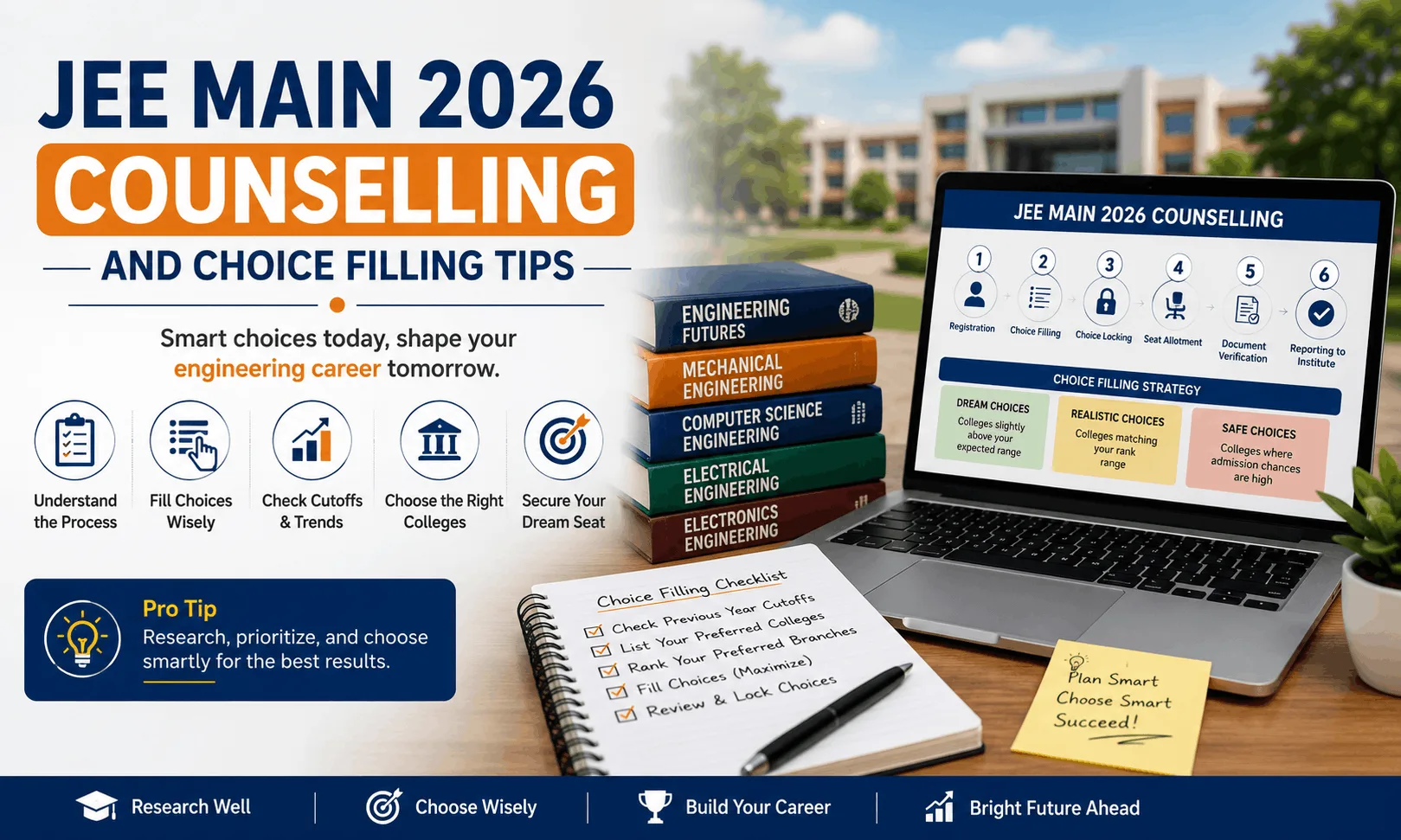
How to Select the Right College for Your Career Goals
Choosing the right college can shape your future career opportunities. Discover key factors, placement insights, counselling tips, and common mistakes to avoid before making your admission decision.
✍️ Admin📅 20 Jun 2026📁 Career Guidance
Choosing a college is one of the most important decisions in a student's academic journey. While many students focus on rankings and popularity, the right college is the one that aligns with their career goals, interests, learning style, and future aspirations. With hundreds of universities and institutions offering similar courses, making an informed decision requires careful research and planning.
A well-chosen college can provide quality education, practical exposure, networking opportunities, and career support that contribute to long-term professional success. This is where proper counselling and guidance become valuable.
Why College Selection Matters
A college does much more than award a degree. It shapes your skills, industry exposure, professional network, and employment opportunities.
Choosing the right institution can influence:
Career growth and job opportunities
Internship and industry exposure
Higher education prospects
Professional networking
Skill development and practical learning
Students who select colleges based on their long-term objectives often experience better academic and career outcomes.
Key Factors to Consider Before Choosing a College
Course and Curriculum Quality
Start by evaluating whether the college offers a curriculum that matches your career interests. Review course content, electives, industry certifications, and practical training opportunities.
Questions to ask:
Does the syllabus align with current industry trends?
Are there opportunities for hands-on learning?
Does the programme support specialization options?
Placement and Career Support
Placement records are important indicators of a college's industry connections and employability support.
Look for:
Placement statistics
Average salary packages
Internship opportunities
Corporate partnerships
Career development programs
Faculty and Learning Environment
Experienced faculty members contribute significantly to student success. Research faculty qualifications, teaching methods, and academic achievements.
A supportive learning environment often leads to better student engagement and skill development.
Infrastructure and Facilities
Modern facilities enhance the learning experience.
Consider factors such as:
Laboratories and workshops
Libraries and digital resources
Hostel facilities
Sports and extracurricular activities
Campus safety
Quick College Evaluation Checklist
Factor
Importance
Course Quality
Very High
Placement Support
Very High
Faculty Expertise
High
Infrastructure
High
Industry Exposure
High
Location and Accessibility
Moderate
Fee Structure
High
How Counselling Helps Students
Professional counselling can simplify the college selection process by helping students:
Identify suitable career paths
Compare colleges objectively
Understand admission requirements
Evaluate return on investment
Make informed academic decisions
Counsellors can also help students explore alternative options if their preferred institutions are unavailable.
Common Mistakes to Avoid
Choosing Only Based on Rankings
A highly ranked college may not always be the best fit for your chosen career path.
Ignoring Placement Data
Always verify placement records and internship opportunities before making a decision.
Following Peer Pressure
Friends may choose different colleges based on their goals. Your decision should be based on your own interests and aspirations.
Overlooking Financial Planning
Consider tuition fees, accommodation costs, scholarships, and other expenses before finalizing admission.
Final Thoughts
Selecting the right college is not about choosing the most popular institution; it is about finding the best environment for your academic and professional growth. By evaluating course quality, placements, faculty, infrastructure, and career support, students can make confident decisions that support their long-term career ambitions.
With proper research, realistic planning, and expert counselling, students can choose a college that not only provides quality education but also creates a strong foundation for future success.
Frequently Asked Questions (FAQs)
1. How do I choose the right college for my career goals?
Start by identifying your career interests and preferred course. Compare colleges based on curriculum, faculty, placements, industry exposure, infrastructure, and accreditation. Professional counselling can also help you make an informed decision.
2. Is college ranking the most important factor when selecting a college?
No. While rankings provide useful information, students should also evaluate course quality, placement support, faculty expertise, internship opportunities, and overall learning environment before making a decision.
3. How important are placements when choosing a college?
Placements are an important factor because they reflect industry connections and employment opportunities. Students should review placement records, recruiter profiles, internship support, and average salary packages.
4. What role does counselling play in college selection?
Counselling helps students understand career options, compare institutions, identify suitable courses, and avoid common admission mistakes. It also provides clarity about eligibility, fees, and future career prospects.
5. Should I choose a college based on location?
Location can influence living expenses, accessibility, internship opportunities, and industry exposure. However, it should not be the only factor. Academic quality and career support should remain top priorities.
6. How can I verify if a college is recognised or approved?
Students should check official approvals, accreditation status, university recognition, and regulatory body approvals through official government and institutional websites before applying.
7. What factors should parents consider before finalising admission?
Parents should review academic quality, safety, faculty, infrastructure, placement support, hostel facilities, total cost of education, scholarship options, and long-term career outcomes.
8. Is it better to choose a college with lower fees or better placements?
The decision should be based on overall value rather than fees alone. A college with strong academic support, internships, and placement opportunities may offer better long-term career benefits.
9. Can working professionals also benefit from career counselling?
Yes. Working professionals often seek counselling when considering higher education, skill development programmes, executive courses, or career transitions.
10. What are the most common mistakes students make while selecting a college?
Common mistakes include choosing a college based only on rankings, following friends, ignoring placement records, overlooking accreditation, and failing to align course selection with long-term career goals.