Complete Study Abroad Guide for First-Time International Students
Planning to study abroad for the first time? Discover everything you need to know—from choosing the right university and securing a student visa to scholarships, budgeting, and building a successful global career.
📅 31 Jul 2026📁 Career Guidance
Studying abroad is more than earning an international degree—it's an opportunity to build a successful career, experience different cultures, and develop global skills. According to UNESCO, more than 6 million students pursue higher education outside their home country every year, and this number continues to grow. With proper planning, first-time international students can confidently begin their academic journey and maximize future career opportunities.
Why Study Abroad?
Choosing to study abroad offers several academic and professional advantages.
Access to globally recognized universities
Better career opportunities and international exposure
Improved communication and leadership skills
Networking with students from different countries
Opportunity to work while studying in many destinations
These benefits make international education a valuable investment for long-term career growth.
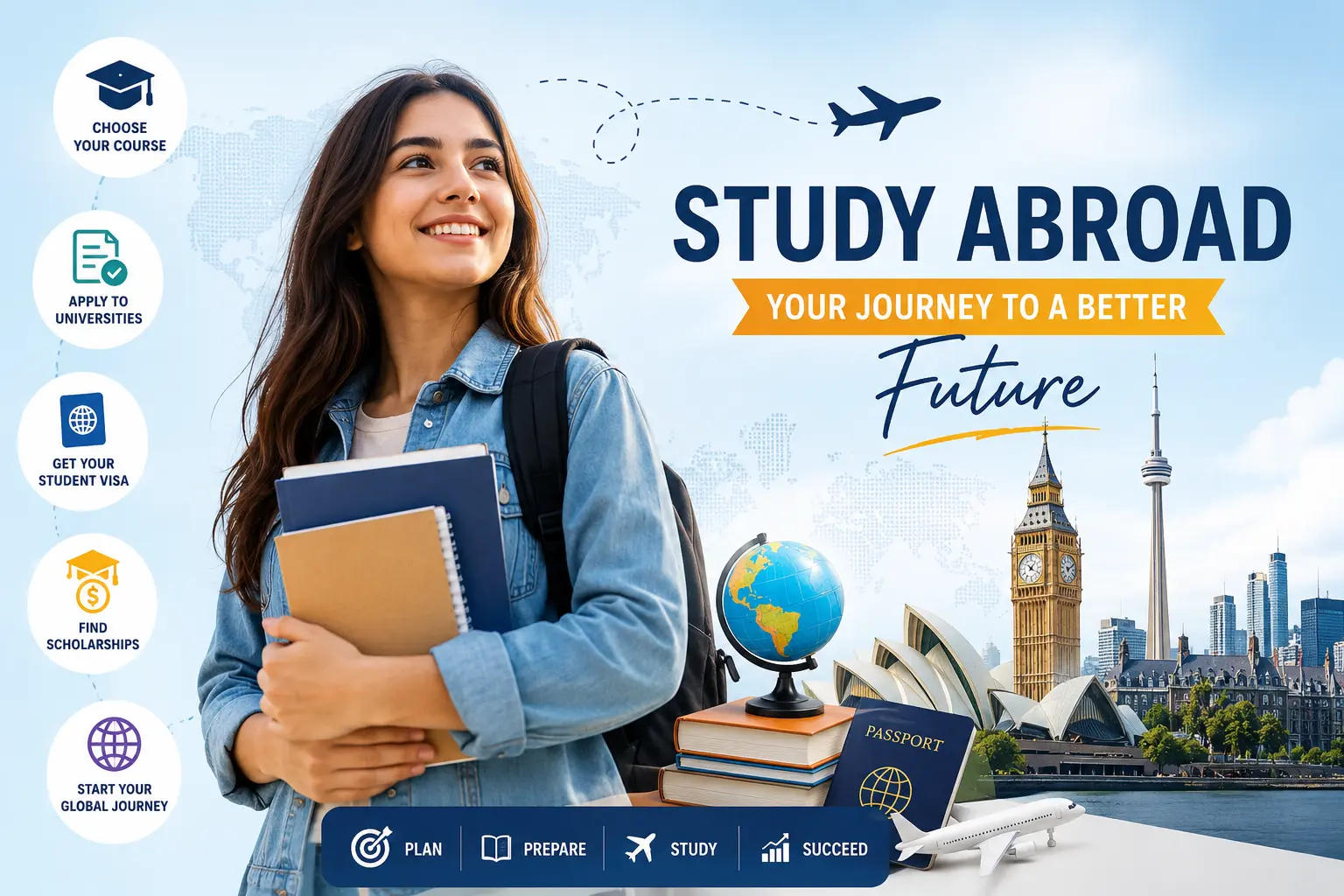
Step-by-Step Study Abroad Process
1. Choose the Right Country and Course
Select a destination based on:
Career goals
Course availability
Tuition fees
Cost of living
Post-study work opportunities
Language requirements
Popular destinations include the USA, Canada, Australia, the UK, Germany, and Ireland.
2. Research Universities
Compare universities using factors such as:
Global rankings
Accreditation
Faculty expertise
Internship opportunities
Graduate employment rate
3. Prepare Required Documents
Keep these documents ready:
Academic transcripts
Passport
Statement of Purpose (SOP)
Letters of Recommendation (LOR)
Resume/CV
English language test scores (IELTS, TOEFL, or PTE)
4. Apply for Admission and Student Visa
Submit applications before deadlines and carefully complete your visa process. Keep financial documents, admission letters, and identity proofs organized.
Estimated Study Abroad Expenses
Expense
Estimated Cost
Tuition Fees
Varies by university and country
Accommodation
Moderate to High
Food & Transportation
Monthly living expense
Health Insurance
Mandatory in many countries
Visa & Application Fees
One-time expense
Always prepare an emergency fund before travelling abroad.
Scholarships and Financial Support
Many universities and governments offer scholarships based on academic performance or financial need. Students should also explore:
Merit scholarships
Need-based scholarships
Education loans
Part-time work opportunities
Applying early increases the chances of receiving financial assistance.
Tips for First-Time International Students
Before Departure
Arrange accommodation in advance.
Purchase travel insurance.
Understand local laws and culture.
Keep digital copies of important documents.
After Arrival
Attend university orientation.
Open a local bank account.
Register with local authorities if required.
Build connections through student clubs and campus events.
Career Opportunities After Graduation
International education strengthens your resume by developing technical knowledge, communication skills, and cross-cultural experience. Many countries also provide post-study work permits, allowing graduates to gain valuable international work experience before returning home or pursuing permanent employment.
Frequently Asked Questions (FAQs)
Is studying abroad worth it?
Yes. It provides global exposure, quality education, better career opportunities, and valuable international experience.
Which country is best for first-time international students?
Canada, Australia, the UK, Germany, Ireland, and New Zealand are among the most preferred choices due to education quality and student support.
Can students work while studying abroad?
Many countries allow international students to work part-time during their studies, subject to visa regulations.
How much money should I budget before moving abroad?
Your budget depends on the country, university, and lifestyle. Include tuition fees, accommodation, food, insurance, travel, and emergency expenses in your financial plan.
Do I need IELTS or TOEFL?
Most universities require proof of English proficiency, although some institutions may offer alternatives or waive the requirement under specific conditions.
Your study abroad journey becomes much easier when you begin planning early, research thoroughly, and stay organized throughout the admission process. By selecting the right university, preparing your documents carefully, and understanding visa and financial requirements, you can confidently build a strong foundation for academic success and a rewarding global career.